
Temporary Number vs Google Voice: Which Should You Use?
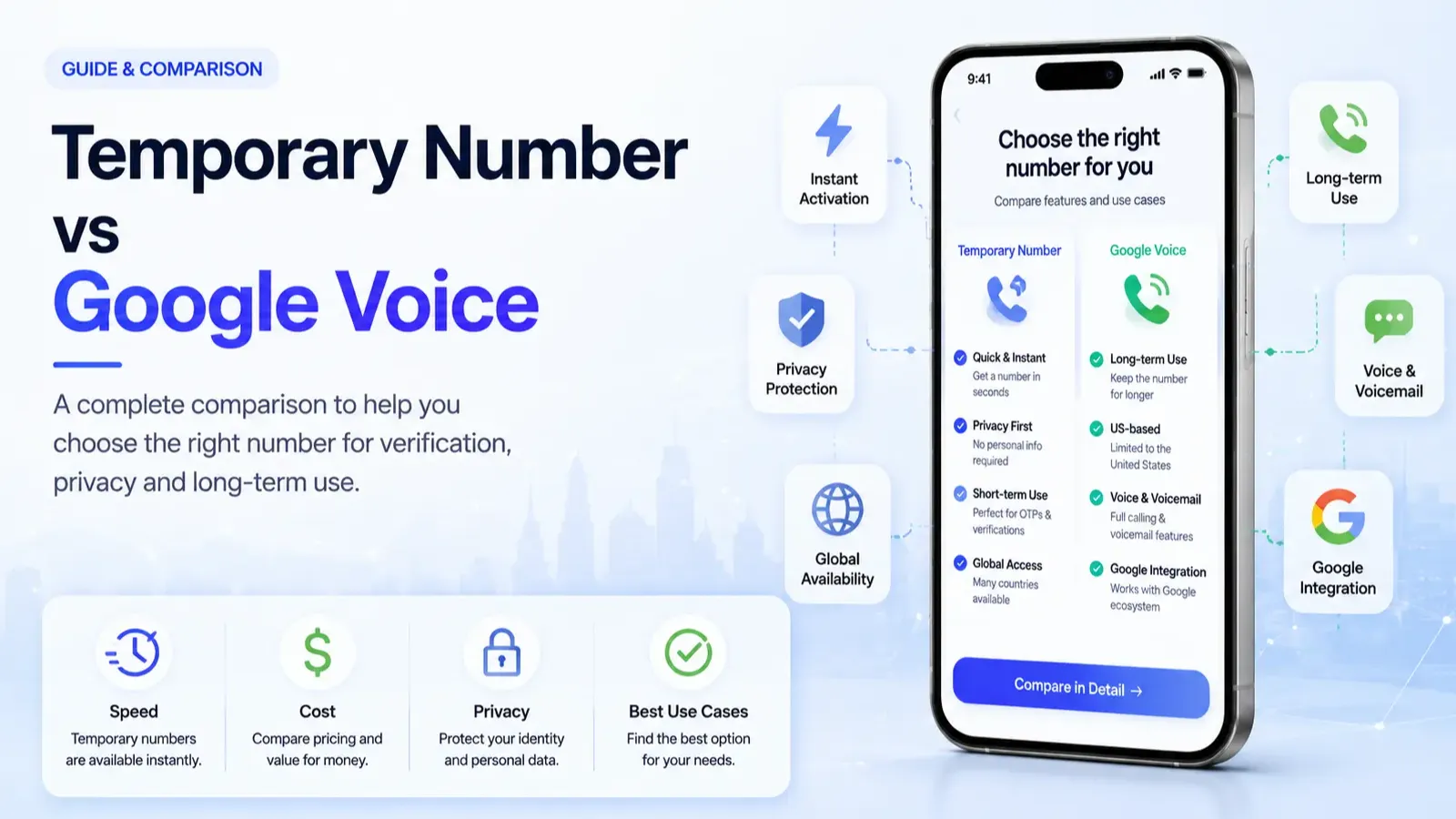
Temporary public number or Google Voice? Compare cost, countries, setup, privacy, and app acceptance, and see when neither fits and a real SIM is safer.
Use a temporary public number for a one-off, low-stakes code you will never need again, and use Google Voice if you live in the US and want a private second number you can keep for years. They solve different jobs, and neither one reliably passes strict apps like WhatsApp, Discord, or banks, because both are commonly flagged as non-mobile numbers.
A temporary public number, like those on Instant SMS numbers, needs no account and works in seconds, but anyone who opens that inbox can read every message. Google Voice gives you a private inbox, but setup needs a Google account, your existing phone, and an identity check.
This comparison is for anyone choosing a second number for signups, privacy, or testing, and wondering whether the free Google option is worth the setup.
Which should you use? Quick verdict by job
Job | Better choice | Why |
|---|---|---|
One-off code for a throwaway signup | Temporary public number | No account, ready in seconds, nothing to clean up afterwards |
You live outside the US | Temporary public number | The free personal Google Voice plan is available only in the US |
Keep the same number long-term | Google Voice | The number stays on your Google account while you keep using it |
Making calls or replying to texts | Google Voice | Temporary public numbers are receive-only |
Privacy from strangers | Google Voice | Only you can read your inbox; public inboxes are shared |
Strict apps (WhatsApp, Discord, banks) | Neither, use a real SIM | Both are often rejected as VoIP or shared numbers |
How do they compare side by side?
Google Voice wins on privacy and permanence; a temporary public number wins on speed, country choice, and zero setup.
Feature | Temporary public number | Google Voice (personal) |
|---|---|---|
Cost | Free | Free basic plan; some calls cost extra |
Countries | Numbers from 100+ countries | US numbers only, for US users |
Setup | None, just open a number page | Google account, code texted to your existing phone, identity check with a government ID |
Who sees messages | Anyone viewing that inbox | Only you |
Keep the number | No, numbers are shared and can rotate | Yes, while you keep using it |
Send texts or call | No, receive only | Yes, from the app or a web browser |
Strict app acceptance | Often blocked | Often blocked as VoIP |
When does Google Voice win?
Google Voice wins when you are in the US and want a durable, private second line you control.
A number you keep. It stays tied to your Google account, so recurring contacts and services keep reaching you.
Two-way use. You can call and text from the Android and iPhone apps or from voice.google.com in a browser, and texts to US and Canadian numbers are free.
A business upgrade path. Paid Google Voice plans and Google Workspace add-ons exist for businesses, and the Workspace versions offer local numbers in a short list of countries beyond the US.
The catch is upkeep. Google reclaims numbers that have had no activity for a long time, after a warning that shows the reclaim date. Make a call or send a text now and then if you want to keep yours.
When does a temporary public number win?
A temporary public number wins when speed matters more than privacy and you will never need the number again.
You need a code in the next minute and do not want to create any account.
You are outside the US, or the service wants a specific country prefix.
You are testing SMS delivery from your own app.
The signup is disposable: a trial, a forum, a coupon page.
The tradeoff is that the inbox is public. Anyone on the same number page can read the same code, and could use it if they act faster than you. Read are public SMS inboxes safe before you rely on one, and follow how to receive SMS online for the steps. If the concept is new to you, start with what a temporary phone number is.
Why do apps reject both?
Most strict apps check what kind of line a number is before sending a code, and both Google Voice and shared public numbers usually fail that check.
Lookup services label numbers as mobile, landline, or VoIP, and many apps classify Google Voice numbers as VoIP and refuse them. Public temporary numbers have a second problem: the same number has already been used for many signups, so apps flag it as reused or high risk. Discord, for example, rejects VoIP, burner, and landline numbers; see why Discord rejects public temporary numbers.
If a code simply never shows up, work through the verification code checklist before blaming the number.
Is Google Voice hard to set up outside the US?
Yes. The free personal plan only offers US numbers to users in the US, so most people outside the US cannot get one at all.
Even in the US, setup has steps a temporary number skips:
Sign in with your Google account.
Search for a number by city or area code and select one.
Confirm your existing phone with a code Google texts to it.
For new numbers, complete identity verification with your legal name, address, and a government-issued ID.
Google says calls and texts do not work until identity verification passes, and a manual review can take up to 3 business days.
When should you use neither?
Use your own SIM, a second physical SIM, or an eSIM from a mobile carrier for any account you cannot afford to lose.
That includes banking, crypto exchanges, government portals, healthcare, and the recovery number on your main email. These services expect a real mobile line, and losing access to the number can lock you out for good. A second SIM or eSIM costs money, but it usually passes line-type checks. More on this in when to skip free public temporary numbers.
Is there a middle ground?
Yes: a private number keeps the inbox to yourself without a US address or a Google account.
Instant SMS provisions private numbers manually on request. There is no self-serve checkout, and nothing is charged until you agree on the details; see pricing. A private number fixes the "anyone can read my code" problem, but it is still not for banking, crypto, government, healthcare, or account recovery. The free vs paid numbers guide covers the tradeoffs.
Bottom line
Pick a temporary public number for quick, disposable codes in 100+ countries, Google Voice for a private US line you will keep, and a real SIM for anything important. If a public inbox fits your job, open the free public numbers list and pick a country.
Frequently Asked Questions
Is a temporary number the same as Google Voice?
No. Google Voice is a private US number tied to your Google account that you can keep, call, and text from. A temporary public number is a shared, receive-only inbox that anyone can view, with no signup.
Can I get Google Voice outside the US?
Not for personal use. The free personal plan offers US numbers to US users only. Paid business plans through Google Workspace offer local numbers in a limited list of other countries.
Does Google Voice require identity verification?
Yes, for new numbers. Google says users who request a new Google Voice number cannot send or receive calls or texts until they verify their identity with their legal name, address, and a government-issued ID.
Will Google Voice work for WhatsApp or Discord verification?
Often no. Many apps treat Google Voice numbers as VoIP and reject them, even though the inbox is private. Use your own mobile SIM for apps with strict number checks.
Can I lose my Google Voice number?
Yes, if you stop using it. Google reclaims numbers after a long period with no activity and shows a warning with a reclaim date first. Making a call or sending a text before that date keeps the number.
Which is better for a one-off signup?
A temporary public number, if a public inbox is acceptable. It needs no account and works in seconds. Avoid it for anything you may need to recover later, because others can see the code.
Can I reply to a text from a temporary public number?
No. Public temporary numbers are receive-only, so you cannot send texts or make calls from them. Google Voice supports both.
Latest posts
-
 Receive SMS 7 min read
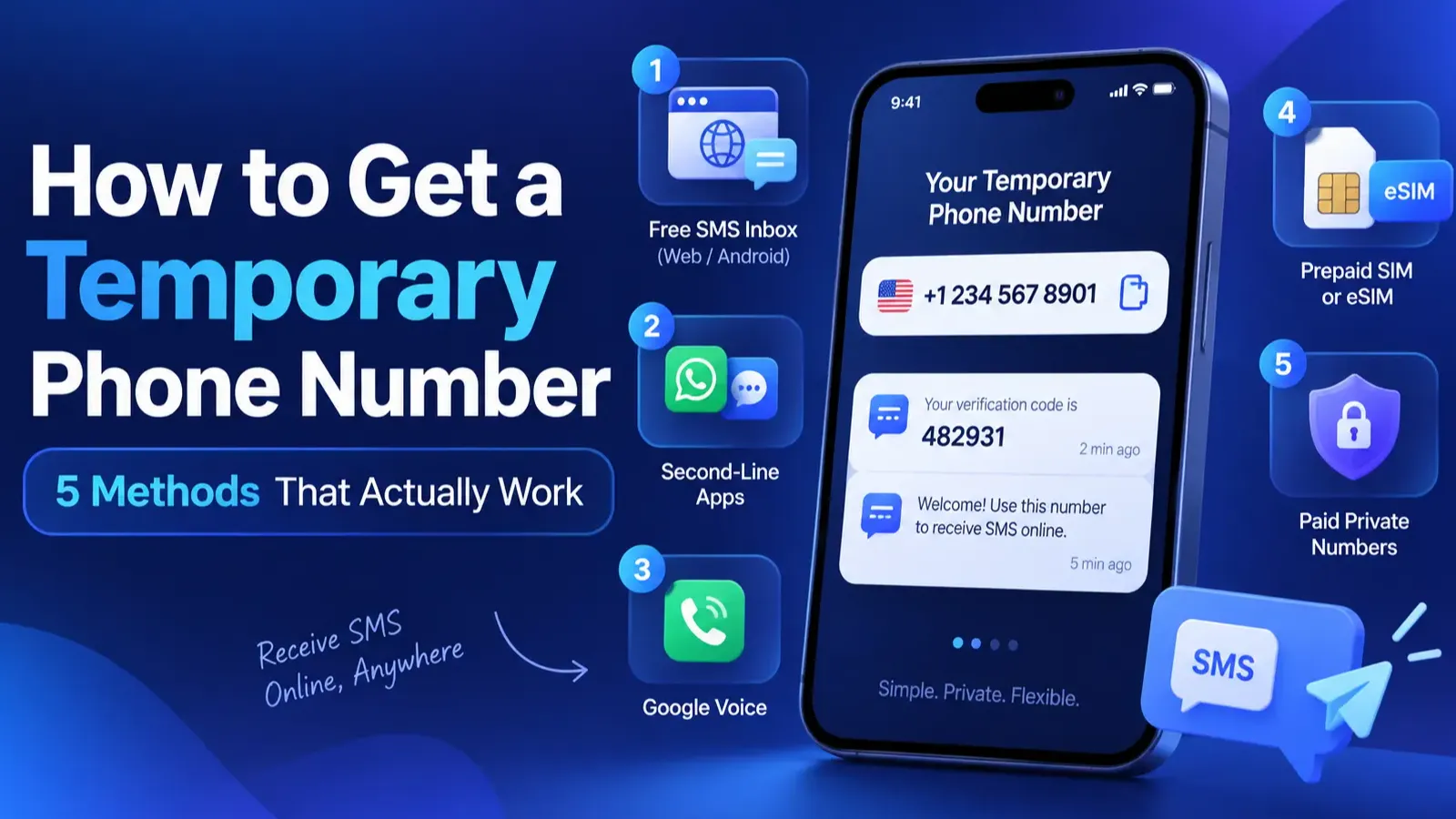
How to Get a Temporary Phone Number (5 Methods That Actually Work)
The fastest way to get a temporary phone number for low-stakes SMS is a free public inbox like Instant SMS (website or Android app). For a longer-lived or private line, use Google Voice, a prepaid SIM, or a private number.
Santosh Regmi
-
 Receive SMS 6 min read
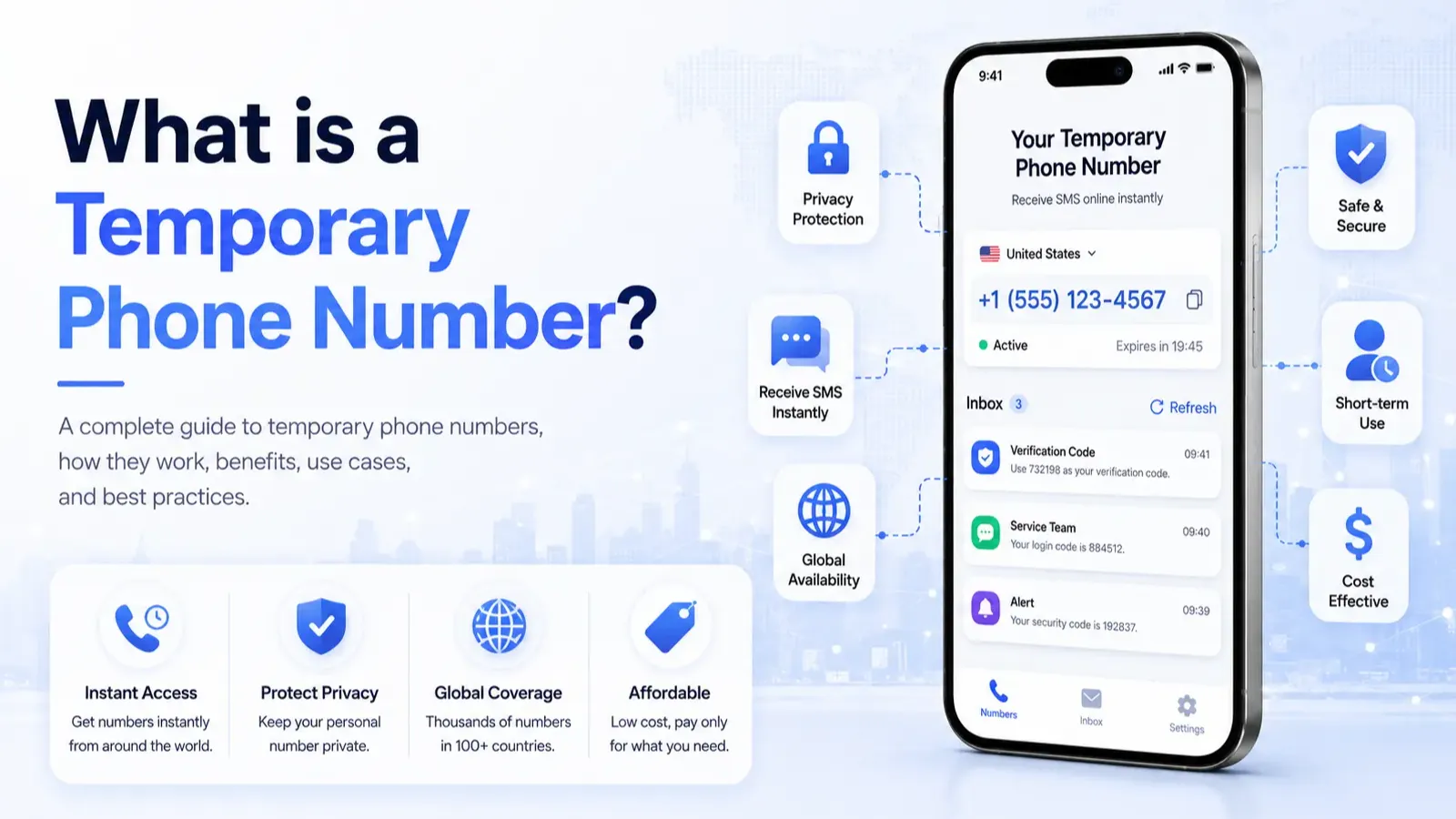
What Is a Temporary Phone Number? Types, Uses and Risks
A temporary phone number is a short-term, usually virtual number for receiving SMS without sharing your own. Learn how it works, the five main types, good uses, and when not to use one.
Santosh Regmi
-
Privacy & Safety 6 min read
Is Using a Temp Number Against an App’s Terms of Service?
Major apps often reject temp numbers in Help Centers or with silent filters. That is usually a ban, not a crime. Instant SMS public inboxes still fail uniqueness checks.
Santosh Regmi





Comments 0
Most recent
No comments yet. Be the first to share a thought.