
What Is a Temporary Phone Number? Types, Uses and Risks
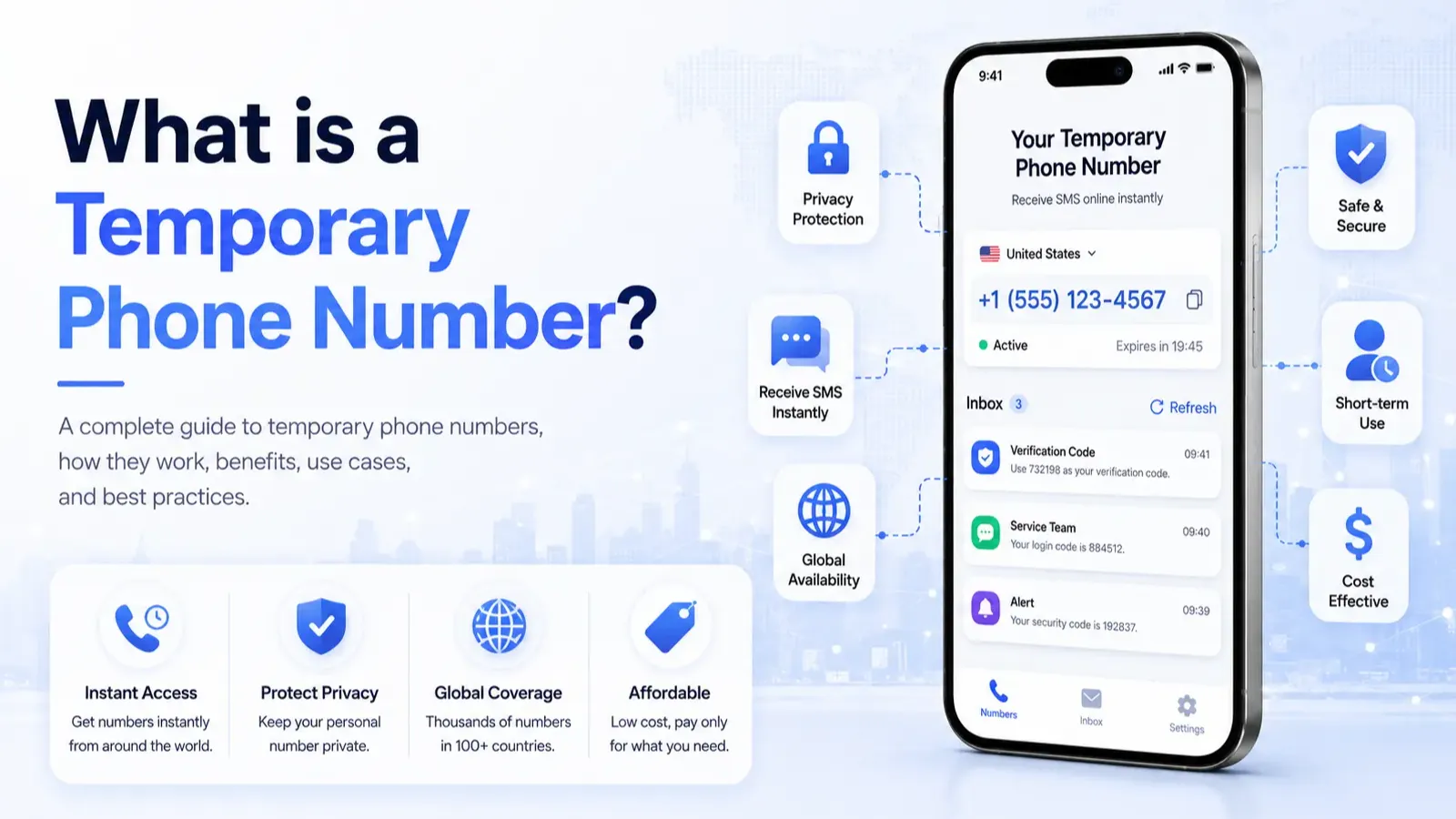
A temporary phone number is a short-term, usually virtual number for receiving SMS without sharing your own. Learn how it works, the five main types, good uses, and when not to use one.
A temporary phone number is a phone number you use for a short time, usually to receive a verification code or a one-off SMS, so you do not have to hand out your personal mobile number. Most temporary numbers are virtual: messages sent to them are routed to a website or app instead of a SIM card in your phone.
The term covers several different products. Some temporary numbers are free and public, so anyone can read the messages. Others are private lines you rent or set up yourself. Below: how they work, the main types, good uses, and where they fail.
How does a temporary phone number work?
A temporary phone number works by forwarding incoming SMS from a real phone number to an online inbox you can open in a browser or app. The number belongs to a provider, not to you, and you use it only for as long as you need it.
Behind the scenes there are two common setups:
Virtual (VoIP or cloud) numbers: the number lives in a telecom platform's software, which passes each incoming SMS to the provider's web page or app.
SIM-backed numbers: the provider keeps physical SIM cards in modems or phones, reads incoming SMS from them, and publishes the messages online.
Either way, you pick a number, enter it on the signup form, then watch the inbox for the code. Many apps check what kind of number you entered, which is why a number can be accepted in one place and rejected in another.
What types of temporary phone numbers are there?
There are five common types, and the biggest difference between them is who can see your messages and whether you can keep the number.
Type | Who sees messages | Can you keep the number? | Typical use |
|---|---|---|---|
Free public shared inbox | Anyone viewing that number's page | No, numbers are shared and can rotate | Low-stakes signups, trials, OTP testing |
Private rented virtual number | Only you | For the rental period | Ongoing low-risk accounts, business testing |
Second-line app (for example Google Voice) | Only you | Usually yes, while the account stays active | A longer-term extra number for calls and texts |
Burner or prepaid SIM | Only you (on your phone) | Until the SIM expires or you stop topping up | A separate physical line for a project or trip |
eSIM | Only you (on your phone) | Depends on the plan | Travel data and local numbers without a plastic SIM |
Only the first type is free and instant. The rest trade cost or setup time for privacy. For a deeper comparison of the first two, see free vs paid receive-SMS numbers.
Temporary vs virtual vs burner vs VoIP: what is the difference?
These words overlap, but they describe different things: how long you use a number, how it is delivered, and who controls it.
Temporary or disposable: describes how long you use it. You take it for one task, then leave.
Virtual: describes how it is delivered. The number is not tied to a SIM in your pocket; messages arrive online.
VoIP: a technical term for numbers run over internet telephony. Many virtual numbers are VoIP numbers, and many apps flag VoIP ranges.
Burner: usually means a private number you control and then discard, either a cheap prepaid SIM or a private app-based line.
So a free public receive-SMS number is temporary and virtual, but not a private burner. A Google Voice number is virtual but meant to be kept. More in temporary number vs Google Voice.
What are temporary phone numbers used for?
Temporary phone numbers are mainly used to keep a personal number out of databases you do not trust. Common, reasonable uses include:
Signup privacy: forums, newsletters, or coupon sites that ask for a number you would rather not share.
Free trials: testing a service before giving it your real contact details.
Developer and QA testing: checking that an app sends OTP codes, how fast they arrive, and how the text looks in different countries.
Travel: receiving a one-off code for a local service when you do not have a local SIM.
The common thread is low stakes. If losing the account would not hurt, a temporary number is a fair fit.
What are the risks and limits of temporary phone numbers?
The main risk is that you do not control the number, so whoever has access to it later may receive codes for your account. Key limits:
Shared visibility: on a public inbox, every message, including your OTP, is visible to anyone who opens that page. Read are public SMS inboxes safe before using one.
Recycling: numbers get reused or retired, so the same one may be gone next month.
Blocks: strict apps such as Discord, WhatsApp, Google, and banks often reject shared or virtual numbers. No temporary number is guaranteed to work with any specific app.
Password reset risk: if an account is tied to a public number, someone else can request a reset code to that same number. See why public numbers and password resets do not mix.
Terms of service: some platforms do not allow virtual or disposable numbers. Check whether using a temp number breaks terms of service.
Never use a public temporary number for banking, crypto, government, healthcare, or account recovery. More examples are in when to skip free public temporary numbers.
Is it legal to use a temporary phone number?
Using a temporary number for privacy or testing is generally legal in many countries; what matters is what you do with it. Fraud, ban evasion, or impersonation is a different matter, and a platform's own rules can forbid virtual numbers even when no law does. Rules vary by country, so read is it legal to use a temporary phone number for the details.
How do you get a temporary phone number?
The fastest way to get a temporary phone number is to open a free public receive-SMS site, choose a number, and use its live inbox. On Instant SMS, you can pick from free shared numbers in 100+ countries on the numbers page, with no account, and the inbox refreshes automatically. These numbers are receive-only, so you cannot send texts or make calls from them.
Full walkthroughs: how to get a temporary phone number and how to receive SMS online.
How do you choose the right temporary number?
Choose based on what happens if someone else reads the code or the number disappears. Simple rules:
Throwaway signup or OTP test: a free public inbox is fine.
You need to log in again later, or want messages kept private: use a private number. Instant SMS sets up private numbers manually on request, with nothing charged until terms are agreed; see pricing.
You want a long-term second line for calls and texts: consider a second-line app or a prepaid SIM.
Banking, crypto, government, healthcare, or account recovery: use your own personal SIM. Not even a private rented number is a good fit here.
In short, a temporary phone number is a useful privacy tool for low-stakes tasks and a poor choice for anything you cannot afford to lose. To see one in action, open a live public inbox and watch messages arrive.
Frequently Asked Questions
What is a temporary phone number?
A temporary phone number is a number you use for a short time to receive SMS, such as a verification code, without sharing your personal mobile. Most are virtual and deliver messages to a web inbox or app.
Is a temporary phone number the same as a virtual number?
Not exactly. Virtual describes how a number is delivered (online, not on a SIM in your phone), while temporary describes how long you use it. Most temporary numbers are virtual, but many virtual numbers, like Google Voice, are meant to be kept.
Can other people see messages sent to a temporary number?
On a free public inbox, yes. Anyone who opens that number's page can read every message, including codes. Private rented numbers, second-line apps, and SIM cards keep messages visible only to you.
Will a temporary number work for WhatsApp, Discord, or Google?
Often not. Strict apps such as WhatsApp, Discord, Google, and banks frequently block shared or virtual numbers, and no temporary number is guaranteed to work with any specific app.
Can I keep the same temporary number?
Not with a free public number. Public numbers are shared and can rotate or be retired. If you need the same number again later, use a private number, a second-line app, or your own SIM.
Is it safe to use a temporary number for banking or account recovery?
No. Do not use a temporary number, public or private, for banking, crypto, government, healthcare, or account recovery. Someone else with access to the number could receive your reset codes.
Latest posts
-
 Receive SMS 7 min read
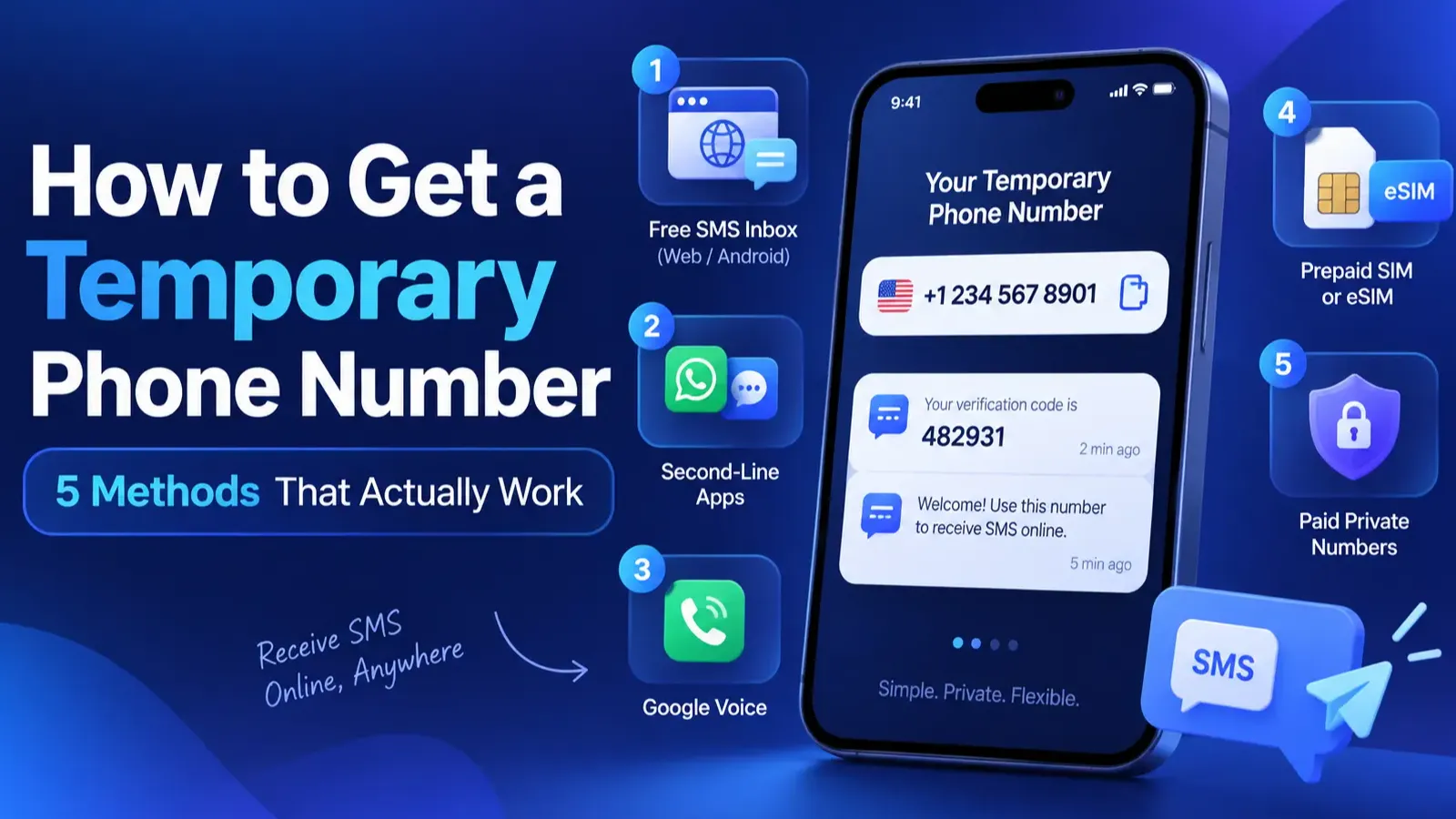
How to Get a Temporary Phone Number (5 Methods That Actually Work)
The fastest way to get a temporary phone number for low-stakes SMS is a free public inbox like Instant SMS (website or Android app). For a longer-lived or private line, use Google Voice, a prepaid SIM, or a private number.
Santosh Regmi
-
 Receive SMS 6 min read
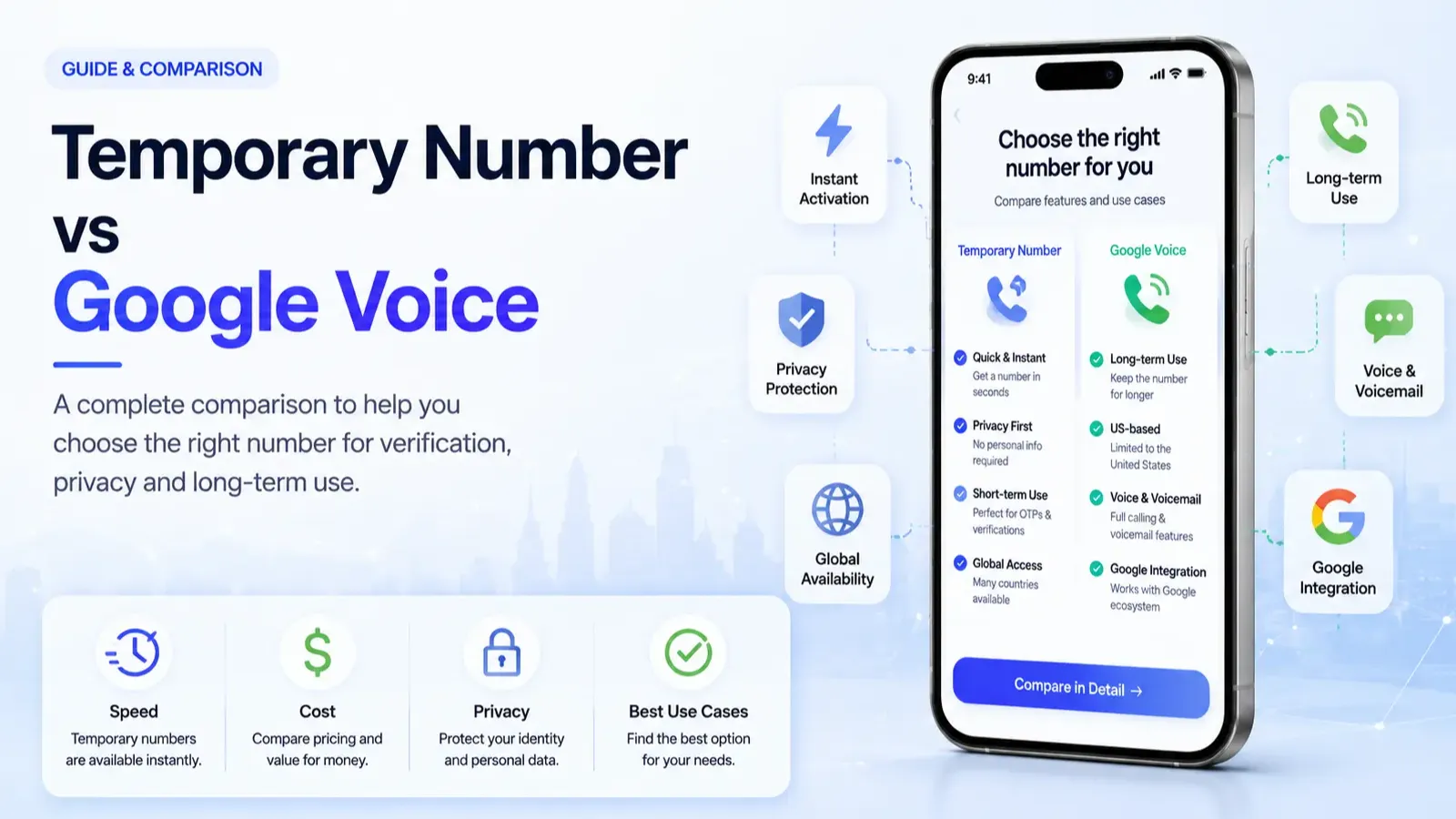
Temporary Number vs Google Voice: Which Should You Use?
Temporary public number or Google Voice? Compare cost, countries, setup, privacy, and app acceptance, and see when neither fits and a real SIM is safer.
Santosh Regmi
-
Privacy & Safety 6 min read
Is Using a Temp Number Against an App’s Terms of Service?
Major apps often reject temp numbers in Help Centers or with silent filters. That is usually a ban, not a crime. Instant SMS public inboxes still fail uniqueness checks.
Santosh Regmi





Comments 0
Most recent
No comments yet. Be the first to share a thought.